
Access to reliable electricity remains a daily challenge for millions of people across Nigeria. Solar Battery Hub , developed by the Centre for Energy Equality in partnership with PAM Africa , is a clean energy solution designed to bridge this accessibility gap through providing reliable, affordable and flexible power to communities where the grid cannot.
The model combines solar-powered charging infrastructure, swappable batteries, and digital tools to deliver energy on demand. Following successful early pilot stages, the project, supported by UK Research and Innovation, is now entering Phase III where we will be demonstrating how this model can operate at a larger scale and integrate more closely with energy infrastructure.
Across many parts of Nigeria, electricity outages are frequent and grid coverage is limited. As a result, households and small businesses often rely on costly and polluting diesel generators to meet their energy needs, with around 22-23 million diesel generators in use across the country.
For communities, this reality has significant consequences:
The demand for reliable electricity is clear, particularly among small businesses that depend on power to generate income. Solar Battery Hub responds directly to this need, offering a clean and flexible alternative that can function independently or alongside existing grid infrastructure.
Solar Battery Hub provides a range of direct benefits for households and small businesses, including:
Phase III represents an important step in moving from small-scale pilots to a larger, more integrated demonstration, helping to show how the model can perform under increased demand and in more complex energy environments.
CEE and PAM Africa will build Africa’s largest battery-swap site in Kano, Nigeria, with 96-batteries available for rental, alongside 20 electric, battery-powered, motorbikes and three-wheelers for rental. The hub will also provide grid ancillary services via its integration into a local sub-station managed by the Kano Electricity and Distribution Company.
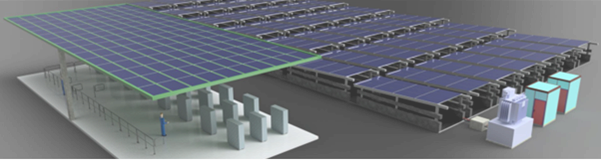
For local community members in Kano, Phase III will:
Findings from earlier phases showed that users highly valued reliability and consistency in their access to electricity, with demand being evident across both households and small businesses. They also showed that access to energy was directly linked to income generation through the productive use of energy and improvements to daily living through savings of up to 70%. Phase III builds directly on these learnings by focusing on improving uptime, expanding access, and ensuring the system is responsive to user needs.
Phase III will also demonstrate how the Solar Battery Hub model can be:
As Nigeria and other countries seek practical pathways to expand energy access while reducing reliance on fossil fuels, Solar Battery Hub offers an important example of how decentralised, user centred energy solutions can support both livelihoods and climate goals.